Computational modeling
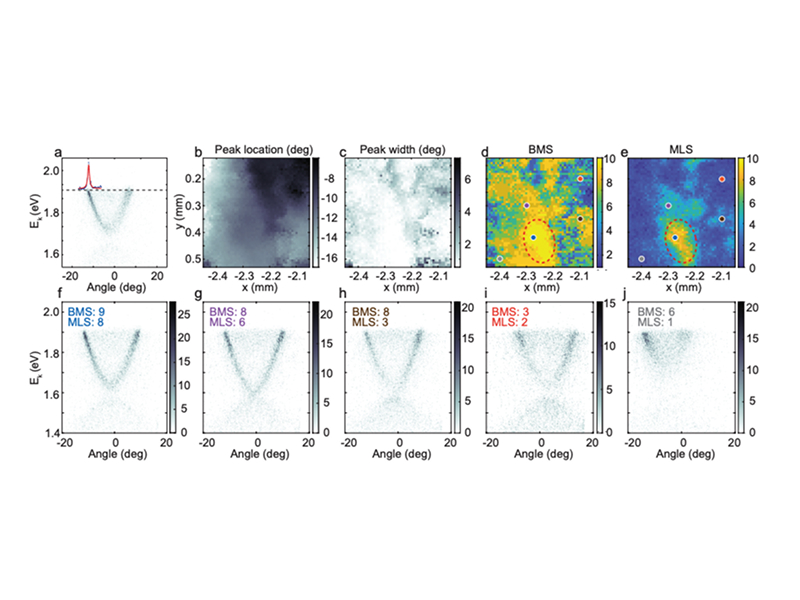
Computational modeling provides an essential complement to experiment by linking the measured spectroscopic response of a material to its underlying electronic structure. In our work, density functional theory and tight-binding models are used to calculate the band structure, orbital character, and symmetry properties of quantum materials, and to guide the interpretation of photoemission and x-ray scattering measurements. These approaches also form the foundation of chinook, an open-source Python framework developed in our group for the simulation of angle-resolved photoemission spectroscopy (ARPES).
By explicitly modeling the interaction of light with quantum-mechanical electronic states, chinook enables quantitative calculations of ARPES matrix elements and intensities, allowing subtle orbital and symmetry information to be extracted from experiment. More broadly, these computational tools help bridge first-principles theory and spectroscopy, and form an important part of our effort to develop a more complete and predictive understanding of quantum materials.
Publications
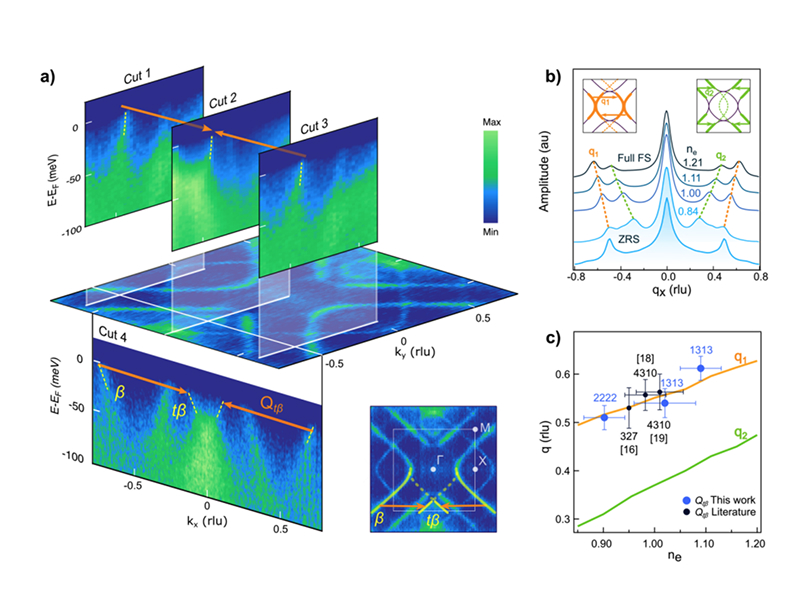
Universal electronic structure of layered nickelates via oxygen-centered planar orbitals